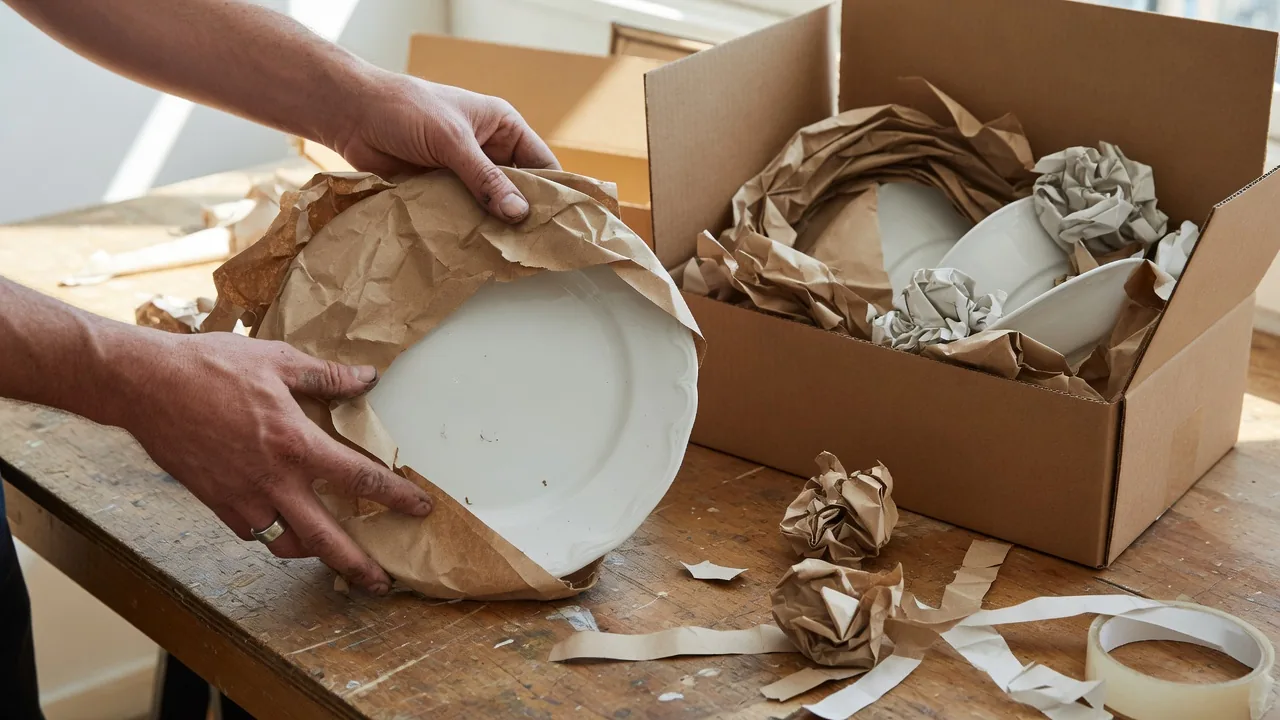
Broken dishes, cracked picture frames, shattered glassware — these are the moving horror stories nobody wants to live through. The good news? Proper packing technique prevents virtually all breakage during a move. Our crews at Manchester Movers handle fragile items every single day, and the methods we use are straightforward enough for anyone to learn.
The Right Materials Make All the Difference
Before you start wrapping, make sure you have the right supplies on hand. Using the wrong materials — or skimping on them — is the most common cause of damage during a move.
- Packing paper (unprinted newsprint) — the workhorse of fragile packing
- Bubble wrap — for extra-fragile items like crystal, porcelain, and electronics
- Dish pack boxes — double-walled corrugated boxes designed for kitchenware
- Cell dividers — cardboard inserts that create individual compartments for glasses
- Packing tape — reinforce the bottom of every box with an H-pattern
- Markers — label every box "FRAGILE" on at least two sides and the top
Never use newspaper for wrapping — the ink transfers permanently to dishes, glass, and fabric. Always use clean packing paper.
Packing Dishes and Plates
Dishes are the most commonly broken item during a move, but they're also the easiest to protect with the right technique.
- Wrap each plate individually in 2-3 sheets of packing paper
- Stack plates vertically (on their edge, like records) — they're much stronger this way
- Place heavier items (dinner plates) on the bottom, lighter items (salad plates) on top
- Fill all gaps with crumpled paper so nothing shifts
- The box should feel firm when closed — if items move when you shake it gently, add more paper
Packing Glasses and Stemware
Wine glasses and stemware are the most fragile items in your kitchen. The stem is the weak point, so that's where the protection goes.
- Stuff packing paper inside the glass first to reinforce it from within
- Wrap the stem separately with a small piece of bubble wrap
- Wrap the entire glass in packing paper, folding the excess over the top
- Use cell dividers to keep each glass in its own compartment
- Never lay glasses flat — always store them upside-down or at an angle
Packing Artwork and Mirrors
Framed art and mirrors need protection from both impact and pressure. Here's the professional approach:
- Apply painter's tape in an X pattern across the glass — if it cracks, the tape holds the shards
- Wrap the entire piece in bubble wrap, securing with tape
- Place in a picture box or create a custom cardboard sleeve from two pieces of cardboard taped together
- Mark the box "FRAGILE — GLASS" and indicate which side is up
- Always transport flat art and mirrors vertically, never flat on their backs
Packing Electronics
TVs, monitors, and other electronics are sensitive to both impact and static electricity.
- Original boxes are best — if you still have them, use them
- If not, wrap the screen with a soft blanket or foam padding, then place in an appropriately sized box
- Remove all cables and pack them separately in a labeled bag
- Take photos of all connections before disconnecting (see our stress-free moving tips)
- Never pack electronics with packing peanuts — they generate static
Special Items: Lamps, Vases, and Collectibles
Oddly shaped items need custom protection. Here's how we handle them:
- Lamps: Remove the shade and bulb. Wrap the base in bubble wrap. Pack the shade in a separate box with paper padding — never nest it inside another shade.
- Vases: Stuff the inside with packing paper, then wrap the outside. Place in a box with at least 3 inches of cushioning on all sides.
- Collectibles and figurines: Wrap each piece individually in tissue paper, then bubble wrap. Keep these in small boxes — a heavy box of breakables is a disaster waiting to happen.
Loading Fragile Boxes on the Truck
Packing is only half the battle — how fragile boxes are loaded matters just as much.
- Fragile boxes always go on top of the stack, never on the bottom
- They should be placed on a flat, stable surface — not balanced on rounded items
- Never place anything heavy on top of a box marked "FRAGILE"
- Keep fragile items away from the truck walls where they can shift during turns
When in doubt, add more padding. An extra sheet of packing paper costs pennies — replacing a broken heirloom is priceless.
When to Call the Pros
Some items are better left to professional packers: antique furniture, fine art, pianos, grandfather clocks, and large mirrors. These require specialized crating and handling techniques that go beyond standard packing.
At Manchester Movers, our professional packing crews handle fragile items every day. We use commercial-grade materials and techniques honed over decades. If you'd rather leave the wrapping to us, request a free quote and we'll include packing in your estimate.